Sickle Cell Treatment India from Cameroon: Expert Care for Children
Sickle cell disease (SCD) is a hereditary blood disorder prevalent in Sub-Saharan Africa, including Cameroon. Children born with SCD inherit faulty hemoglobin genes from both parents, resulting in red blood cells that are crescent-shaped, rigid, and sticky. This leads to reduced oxygen transport, anemia, and multiple complications.
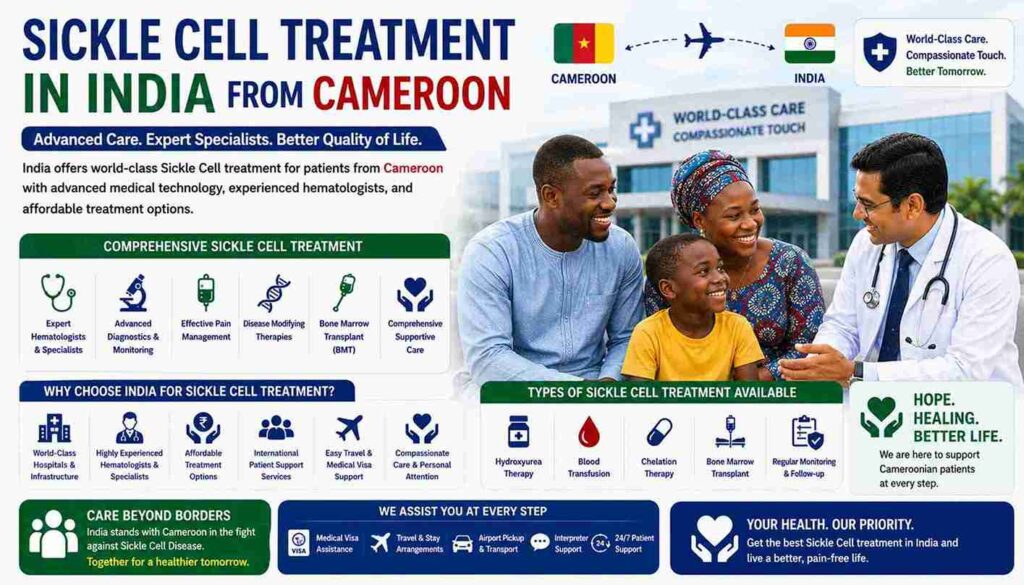
India has emerged as a preferred destination for African families seeking curative treatment for sickle cell disease, offering high success rates, affordable care, and advanced pediatric hematology expertise. For families looking for Sickle Cell Treatment India from Cameroon, MediHelp Global helps coordinate the entire treatment journey for Cameroonian children, from hospital selection to post-treatment follow-up. (medihelpglobal.com)
Understanding Sickle Cell Disease
What is sickle cell disease?
SCD is a genetic condition where red blood cells assume a sickle or crescent shape, reducing their flexibility. These malformed cells can block blood flow, cause tissue hypoxia, pain crises, and damage organs.
Difference between sickle cell anemia and sickle cell disease
- Sickle cell anemia (HbSS): Most common and severe form of SCD.
- Sickle cell disease: Broad term encompassing all hemoglobinopathies caused by mutations in the HBB gene.
Difference between sickle cell trait and disease
- Trait: One defective HBB gene; usually asymptomatic.
- Disease: Two defective HBB genes; symptomatic with anemia, pain crises, and complications.
Types of Sickle Cell Disease
- HbSS: Severe anemia; 65% of cases.
- HbSC: Milder; inherits HbS from one parent and HbC from the other.
- HbS + Beta Thalassemia: Mild to moderate; inherits HbS from one parent and beta-thalassemia gene from the other.
How the HBB gene mutation affects red blood cells
- Mutated hemoglobin leads to rigid, sticky RBCs that die prematurely (10–20 days), causing chronic anemia and reduced oxygen delivery. Pain crises, infections, and organ damage result from these abnormal cells.
Complications of Sickle Cell Disease
Pain crises (Vaso-occlusive crises)
Sudden, severe pain due to blocked blood flow; affects chest, back, arms, and legs.
Acute chest syndrome and stroke
- Acute chest syndrome: Lung injury and hypoxia; potentially life-threatening.

- Stroke: RBC clumping disrupts brain oxygenation; affects learning and neurological development.
Splenic sequestration and anemia
Spleen may enlarge suddenly; frequent RBC destruction causes severe anemia requiring transfusions.
Multiple organ damage and infections
Organs like the heart, lungs, kidneys may fail over time. Increased susceptibility to pneumonia, meningitis, and hepatitis.
Vision problems and priapism
Blocked blood flow in eye vessels leads to retinopathy or blindness. Priapism may occur in male adolescents.
Why African Families Choose India for Sickle Cell Treatment
Advanced pediatric hematology and BMT centers
India has JCI-accredited hospitals, pediatric hematology experts, and specialized bone marrow transplant units.
Experienced hematologists and BMT specialists
Top doctors perform allogeneic BMT with high success rates and personalized treatment planning.
High success rates for allogeneic BMT
Over 90% of pediatric patients achieve curative outcomes with properly matched donors.
Cost-effective treatment compared with other countries
India provides high-quality care at 30–50% lower cost than US/Europe while maintaining global standards.
Comprehensive care and post-treatment follow-up
Multidisciplinary teams manage transfusions, hydroxyurea therapy, vaccination, and teleconsultation follow-up.
Curative Treatments in India
Allogeneic Bone Marrow Transplant (BMT)
- Procedure: Replace diseased bone marrow with healthy donor marrow (HLA-matched).
- Advantages: Curative, resolves pain crises, prevents organ damage, restores normal life expectancy.
- Limitations: Finding a donor, GVHD risk (~9%), immunosuppressive therapy, fertility and secondary malignancy considerations.
Other Supportive Treatments
- Hydroxyurea therapy: Reduces pain crises.
- Blood transfusions: Correct anemia, prevent stroke.
- Folic acid and pain management
- Vaccination and infection monitoring
MediHelp Global Assistance for Cameroonian Patients
Medical report review and treatment planning
Upload hematology reports, transfusion history, genetic testing for evaluation.
Hospital and doctor coordination
Match each patient to specialized pediatric hematologists and BMT centers.
Medical visa, travel, accommodation, and interpreter services
Streamlined visa process, airport pickup, lodging near hospitals, and bilingual interpreters.
Post-treatment follow-up and teleconsultation
Monitor patient growth, organ function, and medication adherence remotely.
Sickle Cell Treatment Cost in India
- Allogeneic BMT: USD 25,000–45,000
- Hydroxyurea therapy: USD 50–200/month
- Blood transfusion: USD 150–500/session
- Other supportive care: USD 200–800 per episode
Factors affecting cost: Hospital, disease severity, donor type, ICU stay, post-transplant medications, length of stay.
FAQ Section
1. What is sickle cell treatment India from Cameroon?
It is medical care for children with sickle cell disease in India, including curative bone marrow transplants, transfusions, and supportive therapy.
2. What is the difference between sickle cell anemia and sickle cell disease?
Sickle cell anemia is the severe HbSS form; sickle cell disease includes all hemoglobinopathy types.
3. Can children with sickle cell disease be cured?
Yes, through allogeneic bone marrow transplant if donor matching and health criteria are met.
4. How does MediHelp Global assist Cameroonian patients?
By coordinating hospitals, BMT specialists, medical visas, travel, accommodation, and follow-up care.
5. Are vaccinations important for children with SCD?
Yes. Vaccination prevents pneumonia, meningitis, and viral infections, reducing life-threatening complications.