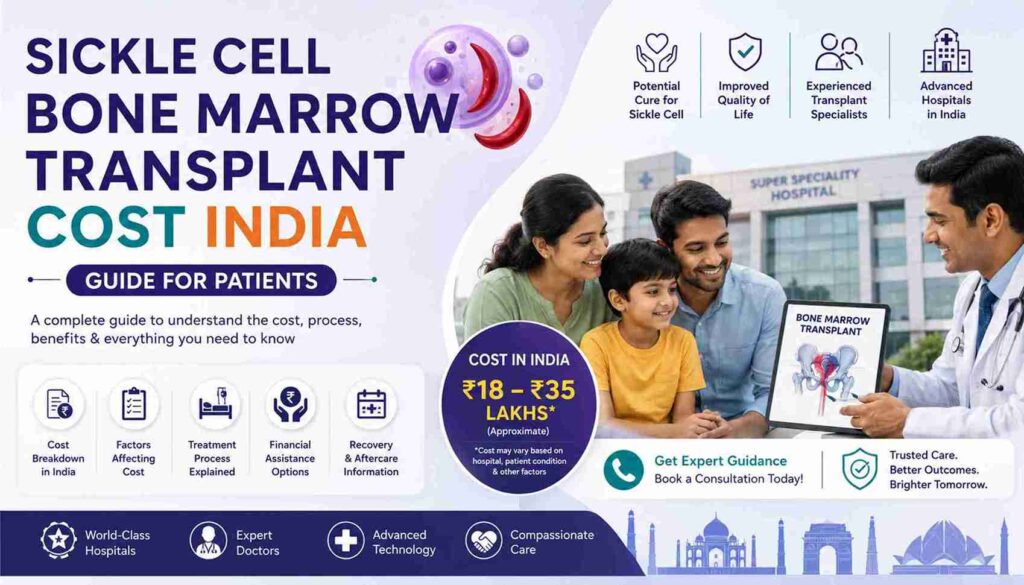
Sickle Cell Bone Marrow Transplant Cost India
| Complete Guide
Sickle cell disease is a serious genetic blood disorder that affects red blood cells, causing them to assume a crescent or sickle shape. This abnormal shape blocks blood flow and reduces oxygen delivery, leading to pain, organ damage, and a shortened life expectancy.
A bone marrow transplant (BMT) is currently the only curative treatment option for eligible patients. For those comparing Sickle Cell Bone Marrow Transplant Cost India, India has emerged as a leading destination for affordable, high-quality BMT, offering international patients world-class care at a fraction of Western costs.
Understanding Sickle Cell Disease
Sickle cell disease (SCD) primarily affects populations in Sub-Saharan Africa, including Kenya, where prevalence can reach 20–30% in certain regions. The condition impairs oxygen transport, causing chronic anemia, painful crises, infections, and potential organ damage. Globally, over 20 million people are affected, with more than 100,000 cases in the United States.
Why Bone Marrow Transplant is Recommended
Bone marrow produces red blood cells (RBCs), and in SCD, the marrow generates defective RBCs. A transplant replaces the patient’s marrow with healthy stem cells, restoring normal RBC production.
Benefits:
Produces healthy RBCs, addressing the root cause
Reduces pain crises and hospital visits
Strengthens the immune system
Improves long-term life expectancy
Risks:
Graft-versus-host disease (GVHD)
Infection due to immunosuppression
High cost and lengthy hospital stay
Requires strict monitoring post-transplant
Types of Bone Marrow Transplants
Type
Description
Cost in India (USD)
Allogeneic
Donor stem cells, typically sibling
30,000 – 35,000
Haploidentical
Partial match from parent/relative
40,000 – 45,000
Autologous / Gene Therapy
Patient’s own stem cells corrected
18,000 – 20,000
Matched Unrelated Donor
From donor registry
70,000 – 75,000
Cost of Bone Marrow Transplant for Sickle Cell in India
India offers BMT at significantly lower prices than Western countries:
India: $18,000–$45,000 (excluding registry)
US: $120,000–$250,000
Donor registry costs increase total expenses for unrelated donors
Donor Selection and HLA Matching
Human Leukocyte Antigen (HLA) matching is crucial.
Sibling donors: 100% match preferred
Haploidentical donors: Partial match (50%)
Unrelated donors: Found via international registry, higher cost but increases success chances
Umbilical cord blood is another source, offering stem cells when no sibling or matched donor is available.
Step-by-Step Bone Marrow Transplant Procedure
Pre-Transplant: 2–3 cycles of chemotherapy (induction) to remove diseased marrow
Transplant: Stem cells infused via central line, migrate to bone marrow
Post-Transplant Care:
Isolation for ~35 days
Daily monitoring of vitals, blood counts, fluid intake
Infection prevention and supportive care
Gradual recovery over 3–6 months
Travel and Logistics for International Patients
Air Travel: New Delhi’s Indira Gandhi International Airport is accessible from Kenya
Accommodation: Coordinated near hospitals with budget or premium options
Patient Coordinators: Handle appointments, visa, travel, and post-care follow-ups
Sample flight options from Nairobi: Ethiopian Airlines, Qatar Airways, Kenya Airways, flight time ~15 hours
Success Rates and Outcomes in India
Overall success rate: ~90%
Event-free survival: 76%
Long-term outcomes improve significantly with sibling donors and timely treatment
Medihelp Global Support for International Patients
Medihelp Global ensures:
Hospital and donor selection
Visa and travel assistance
Scheduling of pre-transplant tests and consultations
Accommodation and post-treatment telemedicine follow-up
Full patient guidance throughout treatment
FAQ Section
Q1: What is the cost of BMT for sickle cell in India?
A1: Costs range from $18,000–$45,000 depending on transplant type and donor match.
Q2: Who can be a donor for BMT?
A2: A maximum of two attendants, who must be blood relatives, can travel with the patient.
Q3: What are the risks of BMT?
A3: Passport, photos, hospital invitation, medical reports, vaccination certificates, and proof of finances.
Q4: How long is the hospital stay?
A4: Yes, via FRRO registration, based on hospital recommendation and medical necessity.
Q5: Why choose India for BMT?
A5: Usually 2–3 working days after submission at the Indian High Commission in Nairobi.
Know More About Sickle Cell Bone Marrow:-Click here