Sickle Cell Disease Treatment India from Kenya | Complete Guide
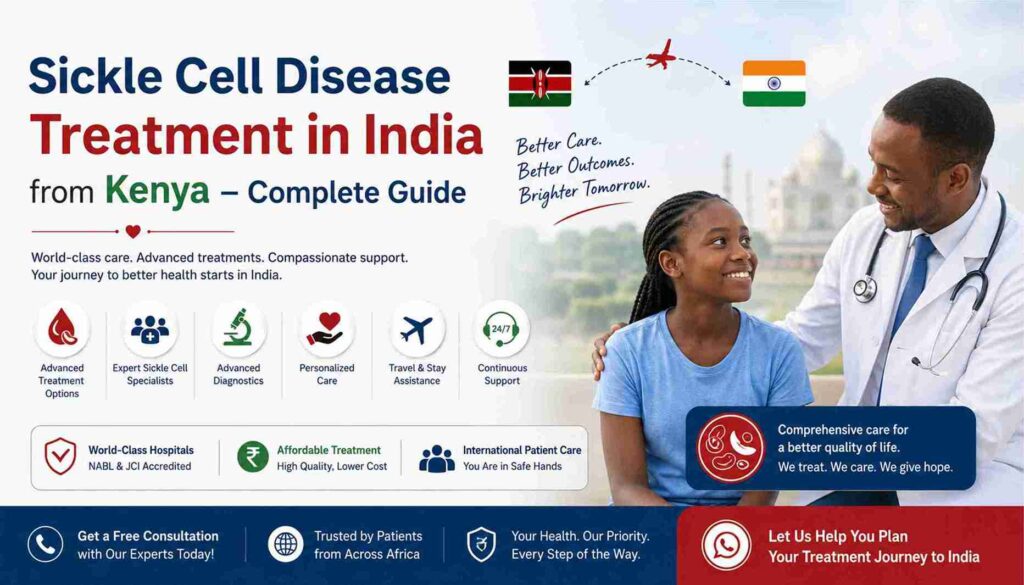
Sickle cell disease (SCD) is a hereditary blood disorder characterized by abnormally shaped red blood cells, leading to anemia, recurrent pain crises, organ damage, and an increased risk of infections. For Kenyan patients seeking Sickle Cell Disease Treatment India from Kenya, India offers a full spectrum of treatment options, from standard medical care to curative bone marrow transplantation, at world-class hospitals with cost-effective care.
Understanding Sickle Cell Disease (SCD)
SCD arises due to a genetic mutation in hemoglobin, causing red blood cells to adopt a crescent or sickle shape. These cells have reduced oxygen-carrying capacity and shorter lifespan, which leads to:
- Severe anemia
- Recurrent painful episodes (“sickle crises”)
- Increased susceptibility to infections
- Organ damage (kidneys, liver, lungs, heart)
- Stroke risk in children
Early diagnosis and consistent management are key to improving life expectancy and quality of life.
Standard Medical Management
Most SCD patients benefit from long-term outpatient care that minimizes complications. Common therapies include:
- Hydroxyurea: Boosts fetal hemoglobin (HbF) to reduce sickling and hospital visits
- Pain Management: Mild pain with acetaminophen/NSAIDs, severe pain with opioids under medical supervision
- L-glutamine: Reduces oxidative stress and crisis frequency
- Voxelotor: Improves hemoglobin levels and reduces hemolysis
- Crizanlizumab: Monoclonal antibody therapy to reduce pain attacks
- Antibiotics & Vaccinations: Prevent infections, especially in children
Blood Transfusions and Preventive Care
- Blood transfusions: Manage severe anemia and prevent strokes in high-risk children

- Routine monitoring: Eye exams, kidney & liver function tests, cardiac assessments
- Lifestyle and hydration: Avoid extreme temperatures, maintain diet and exercise, regular medical check-ups
Bone Marrow / Stem Cell Transplant – Curative Option
For eligible patients, allogeneic bone marrow or stem cell transplant offers a potential cure. Key considerations:
- HLA-matched donor (siblings preferred)
- Pre-transplant evaluation: Genetic matching, labs, imaging
- Conditioning treatment: Chemotherapy/radiation to prepare marrow
- Post-transplant care: Immunosuppressants, infection prevention, blood work follow-up
Success rates: Highest with matched sibling donors; complications can include graft-versus-host disease and infections.
Pediatric Sickle Cell Treatment India Kenyans
In children, SCD manifests from 5–6 months of age. Early signs include:
- Hand-foot swelling (dactylitis)
- Frequent infections
- Delayed growth and puberty
Treatment focuses on:
- Routine visits
- Preventive antibiotics and vaccines
- Hydroxyurea therapy
- Blood transfusions as needed
- Bone marrow transplantation for eligible children
Emerging Therapies
- Gene therapy: CRISPR and other gene-editing techniques targeting the sickle mutation
- New drugs: Experimental therapies that address the molecular cause of sickling
These options are currently in clinical trials and available in select Indian hospitals.
Factors Affecting SCD Treatment Cost in India
|
Factor |
Description |
|
Type of transplant |
Allogeneic more costly than autologous; sibling-matched donors cheaper than unrelated or haploidentical |
|
Hospital & location |
Tier-1 metro hospitals with NABH/JCI accreditation are higher priced |
|
Pre-transplant evaluation |
HLA typing, labs, imaging add to cost |
|
Conditioning therapy |
Chemo/radiation dose and duration impact expense |
|
Post-transplant drugs |
Immunosuppressants, antivirals, antifungals, follow-ups |
|
Patient health & age |
Younger, healthier patients have lower complication costs |
|
Donor search & logistics |
Registry fees, transport, and stem cell processing |
Why India is Ideal for Kenyan Patients
- Skilled hematologists with international experience
- Globally accredited hospitals (NABH, JCI)
- Lower cost compared to Western countries
- International patient services: Travel, visa, post-discharge care, telemedicine
How Medihelp Global Supports Kenyan Patients
Medihelp Global ensures a smooth treatment journey:
- Appointment booking with top hematologists
- Medical visas and travel arrangements
- Accommodation and local SIM cards
- Currency exchange and patient support
- Case manager to coordinate hospital, treatment, and post-discharge care
Success Rates and Long-Term Outcomes
- Matched sibling transplants: Highest cure rates
- Adults: Symptom management and quality of life improve significantly with medical care
- Children: Early intervention can lead to normal growth and reduced complications
FAQ Section
Q1: How much does SCD treatment cost in India for Kenyan patients?
A1: Costs vary from $10,000–$40,000 depending on transplant type, hospital, and patient age/health.
Q2: Can children undergo bone marrow transplant safely?
A2: Yes, especially with matched sibling donors; early pediatric intervention has high success.
Q3: Are there standard medical treatments for SCD without transplant?
A3: Yes. Hydroxyurea, pain management, blood transfusions, and preventive care are standard.
Q4: How long is hospital stay for transplant?
A4: Typically 3–6 weeks including post-transplant monitoring.
Q5: Does Medihelp Global provide full travel support?
A5: Yes. From visas, flights, accommodation, to post-discharge telemedicine support.
Know More About Sickle Cell Disease:- Click here
Related Post:- Click here