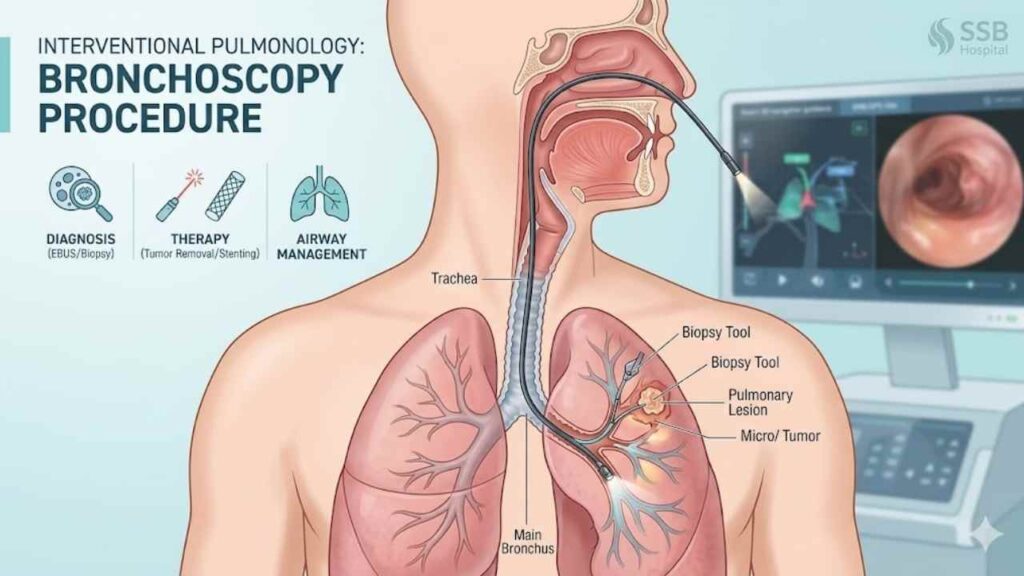
Interventional Pulmonology: Advanced Lung Care for Better Breathing
Breathing should feel natural. But for millions of people, every breath can become difficult because of lung disease, chronic cough, chest tightness, wheezing, or unexplained shortness of breath. That’s where interventional pulmonology plays an important role.
Interventional pulmonology is a modern branch of pulmonology that uses advanced, minimally invasive procedures to diagnose and treat lung, airway, and chest conditions. Instead of relying only on medicines or major surgery, doctors can use tools like bronchoscopy, endobronchial ultrasound, airway stents, and pleural procedures to find problems earlier and manage them more safely.
At MediHelp Global, we help patients from Asia, Africa, South Africa, the Middle East, the USA, and other regions connect with trusted hospitals, pulmonologists, and treatment options in India and abroad. Our goal is simple: make your medical journey easier, clearer, and more comfortable from the first consultation to follow-up care.
What Is Interventional Pulmonology?
Interventional pulmonology focuses on advanced procedures for the lungs, airways, and pleural space. A pulmonologist is a doctor who diagnoses and treats respiratory diseases, including conditions affecting the lungs, airways, air sacs, and blood vessels. Cleveland Clinic describes pulmonologists as specialists for diseases of the respiratory system.
Unlike general pulmonology, which may focus mainly on consultation, medicines, breathing tests, and long-term disease control, interventional pulmonology often involves special diagnostic and therapeutic procedures. These procedures can help doctors look inside the airways, collect tissue samples, drain fluid, open blocked air passages, or manage complex lung conditions.
Common procedures include:
Procedure
Purpose
Bronchoscopy
Views the airways and collects samples
EBUS-TBNA
Uses ultrasound to sample lymph nodes near the lungs
Thoracoscopy
Examines the pleural space around the lungs
Pleural drainage
Removes fluid around the lungs
Airway stenting
Helps keep narrowed airways open
These techniques are especially useful when doctors need accurate answers without immediately choosing major surgery.
When Should You See a Pulmonology Specialist?
You may need a pulmonologist if breathing symptoms continue, keep coming back, or affect daily life. Some people wait too long because they think coughing or breathlessness is “normal.” But early evaluation can make a big difference.
You should consider expert pulmonology treatment if you have:
A cough lasting more than a few weeks
Shortness of breath during simple activity
Wheezing or noisy breathing
Chest tightness
Repeated lung infections
Blood in sputum
Abnormal chest X-ray or CT scan
Suspected lung nodules
Fluid around the lungs
Sleep-related breathing problems
A pulmonology department can run tests such as pulmonary function tests, imaging, bronchoscopy, blood tests, allergy testing, and sleep studies. The right test depends on your symptoms and medical history.
Common Conditions Treated in a Pulmonology Department
A strong pulmonology department treats both common and complex lung problems. These may include asthma, chronic obstructive pulmonary disease, tuberculosis-related lung damage, pneumonia, interstitial lung disease, pulmonary fibrosis, lung cancer, pleural effusion, and airway narrowing.
Asthma and COPD
Asthma and COPD are long-term breathing conditions. Asthma often causes wheezing, cough, and chest tightness. COPD is commonly linked with long-term airway damage and may cause breathlessness, mucus, and repeated flare-ups.
Treatment may include inhalers, lifestyle changes, vaccination guidance, breathing exercises, pulmonary rehabilitation, and regular monitoring.
Lung Nodules and Lung Cancer Evaluation
A lung nodule is a small spot seen on a scan. Not every nodule is cancer, but some need careful testing. Interventional pulmonology can help doctors take tissue samples using bronchoscopy or EBUS.
Modern bronchoscopy methods can help reach difficult lung areas and improve diagnosis. Research has shown that techniques such as radial probe EBUS and navigational bronchoscopy help doctors evaluate peripheral lung lesions.
Pleural Effusion
Pleural effusion means fluid has collected around the lungs. This can cause breathlessness, chest discomfort, or cough. Doctors may remove fluid for testing or relief. In some cases, thoracoscopy or long-term drainage options may be needed.
Key Interventional Pulmonology Procedures
Interventional pulmonology is valuable because it gives doctors a clearer view of what is happening inside the lungs and chest.
Bronchoscopy
Bronchoscopy uses a thin flexible tube with a camera to look inside the breathing tubes. Doctors may use it to check airway blockage, infection, bleeding, tumors, or inflammation. Samples can also be collected during the test.
EBUS-TBNA
EBUS stands for endobronchial ultrasound. It combines bronchoscopy with ultrasound imaging. This helps doctors view and sample lymph nodes near the lungs. EBUS-TBNA is commonly used in lung cancer staging, tuberculosis evaluation, and diagnosis of enlarged chest lymph nodes.
The American College of Chest Physicians has published evidence-based guidance on handling EBUS-TBNA samples, showing how important proper technique is for accurate diagnosis.
Thoracoscopy and Pleural Procedures
Thoracoscopy allows doctors to examine the pleural space around the lungs. It may be used when there is repeated fluid collection or when doctors need pleural biopsy. Pleural procedures can also help relieve breathlessness caused by fluid buildup.
How Interventional Pulmonology Helps International Patients
For international patients, lung care can feel overwhelming. You may have scan reports, unclear symptoms, different doctor opinions, and worries about travel. This is especially true for patients from Asia, South Africa, Africa, the Middle East, and the USA who are exploring advanced treatment options abroad.
MediHelp Global supports international patients by helping with:
Medical report review
Doctor appointment coordination
Hospital selection
Cost estimate support
Visa guidance
Airport pickup and local assistance
Treatment planning
Follow-up coordination
MediHelp Global presents itself as a medical tourism company helping international patients access healthcare services through hospitals and doctors in India and abroad.
Type “continue writing from here” and I’ll complete the remaining sections: best pulmonology hospitals in Kolkata/Hyderabad/Delhi, full FAQs, image alt text, internal link plan, QA checklist, and final CTA.
continue writing
Show moreShow less
Choosing the Best Pulmonology Hospital in India
Finding the right hospital is a crucial step in your treatment journey. India has become a leading destination for interventional pulmonology due to its combination of advanced medical technology, experienced specialists, and cost-effective care.
When selecting a pulmonology hospital, consider the following factors:
Availability of advanced diagnostic tools like EBUS and bronchoscopy
Experienced pulmonologists and multidisciplinary teams
Accreditation and international patient services
Transparent cost structure
Post-treatment care and follow-up support
Kolkata
Kolkata is known for its well-established hospitals and experienced respiratory specialists. Many hospitals here offer comprehensive pulmonology departments with access to modern procedures like bronchoscopy and pleural interventions.
Patients often choose Kolkata for:
Affordable treatment options
Skilled doctors with years of experience
Easy access for patients from eastern India and neighboring countries
Hyderabad
Hyderabad is a major healthcare hub with cutting-edge hospitals. It is especially popular for advanced diagnostics and minimally invasive lung procedures.
Key benefits include:
Modern infrastructure and equipment
International-standard treatment protocols
Strong support for international patients
Delhi
Delhi offers some of the most advanced pulmonology centers in the country. It is ideal for complex cases requiring multidisciplinary care.
Advantages include:
Access to top specialists
Advanced cancer and lung disease treatment
Well-connected international travel options
How MediHelp Global Supports Patients
MediHelp Global acts as a bridge between patients and trusted hospitals. Instead of navigating the healthcare system alone, patients receive guided support at every step.
Here’s how MediHelp Global helps:
Service
Benefit
Medical evaluation
Understand your condition clearly
Doctor matching
Connect with the right pulmonologist
Cost estimation
Plan your treatment budget
Travel assistance
Smooth visa and travel process
Hospital coordination
Hassle-free appointments
Follow-up care
Continued support after treatment
This approach ensures that patients focus on recovery while the logistics are handled efficiently.
Conclusion
Interventional pulmonology has transformed the way lung diseases are diagnosed and treated. With minimally invasive techniques, faster recovery, and more accurate diagnosis, patients now have better chances of managing their respiratory health effectively.
Whether you are dealing with chronic breathing problems, lung nodules, or complex chest conditions, seeking timely care from a specialized pulmonology department can make a significant difference.
With the support of MediHelp Global, patients from around the world can access trusted hospitals, expert pulmonologists, and comprehensive care solutions in India. From the first consultation to full recovery, the journey becomes smoother, safer, and more reassuring.
Frequently Asked Questions (FAQs)
1. What is interventional pulmonology used for?
Interventional pulmonology is used to diagnose and treat lung and airway conditions using minimally invasive procedures like bronchoscopy, EBUS, and pleural interventions.
2. Is bronchoscopy a painful procedure?
Bronchoscopy is usually done under sedation, so patients feel little to no pain. Some mild discomfort or throat irritation may occur afterward.
3. How long does it take to recover from pulmonology procedures?
Most interventional procedures have quick recovery times. Many patients can return home the same day or within 24 hours.
4. Can interventional pulmonology detect lung cancer early?
Yes, techniques like EBUS-TBNA and advanced bronchoscopy help detect lung cancer at earlier stages, improving treatment outcomes.
5. Is India a good option for pulmonology treatment?
India is a popular choice due to its advanced medical facilities, experienced doctors, and cost-effective treatment options.
Know More about Interventional Pulmonology:Click here